

There’s something incredibly calming about gazing into an aquarium with crystal clear water. An unobstructed view of the vibrant fish or the gently swaying aquatic plants can be mesmerizing. But as any aquarium owner knows, achieving and maintaining that clarity isn’t always easy. If you’re struggling with murky water, you’re not alone. This guide aims to walk you through the steps to achieve crystal clear water in your aquarium, based on my personal experiences, trials, and yes, even a few mistakes.
1. Understanding the causes of cloudy water
Before we dive into solutions, it’s important to understand why your water might be cloudy in the first place. There are many reasons this could be happening, and often, it’s a combination of factors rather than a single cause.


It might be bacterial bloom
One of the most common reasons for cloudy water is a bacterial bloom. This usually happens in new tanks that haven’t fully cycled yet. In simple terms, the beneficial bacteria that help break down waste products in the tank haven’t yet established themselves in sufficient numbers. This leads to a temporary spike in bacteria, which can make the water appear cloudy or milky.
Are you overfeeding?
Overfeeding your fish is another common culprit. When uneaten food starts to decompose, it releases organic waste into the water. This excess waste can lead to a spike in ammonia levels, which is not only harmful to your fish but also contributes to cloudy water. It’s a common mistake, especially for new aquarium owners who might think they’re being generous, but really, they’re just overloading the tank’s ecosystem.
Check for improper filtration
Your aquarium’s filter is the heart of its ecosystem. If it’s not working efficiently, or if it’s too small for the size of your tank, it won’t be able to keep up with the waste production. Filters need to be appropriately sized and maintained regularly to function properly.
Consider your water quality
Believe it or not, sometimes the water you’re putting into your tank is the problem. Tap water often contains various minerals, chlorine, and other chemicals that can affect water clarity. If you’re using untreated tap water, you might be introducing more problems than you realize.
Have you rearranged your décor recently?
Every time you rearrange your tank or introduce new plants, you’re disturbing the substrate (the gravel or sand at the bottom of your tank). This disturbance can kick up debris and particles, making your water cloudy for a few days until things settle down.
2. Setting up the foundation for clear water
Now that you know some of the reasons your water might be cloudy, let’s talk about how to set up your tank in a way that prevents these issues from arising in the first place. Prevention, as they say, is better than a cure.
Practice proper tank cycling
If you’re starting a new tank, resist the urge to rush things. Proper tank cycling is crucial. Cycling your tank involves establishing a colony of beneficial bacteria that will help break down waste. This process usually takes 4 to 6 weeks, but it’s worth the wait. During this time, monitor ammonia, nitrite, and nitrate levels to ensure the tank is maturing correctly.
Here’s a tip: Consider adding some hardy fish or using bottled bacteria to speed up the process. But remember, patience is key. Rushing this step can lead to long-term problems.
Select the right filter


The filter you choose should be appropriate for the size of your tank. As a rule of thumb, your filter should be able to process all the water in your tank three to four times per hour. For example, if you have a 30-gallon tank, your filter should process 90 to 120 gallons per hour.
There are three types of filtration to consider: mechanical, biological, and chemical.
- Mechanical filtration involves removing debris from the water.
- Biological filtration relies on beneficial bacteria to break down toxic substances.
- Chemical filtration uses activated carbon or other materials to remove impurities.
Make sure your filter provides all three types of filtration for the best results.
Avoid overcrowding
Another fundamental principle is to avoid overcrowding your tank. More fish means more waste, which can quickly overwhelm your filter and lead to cloudy water. A good rule is to have one inch of fish per gallon of water, though this can vary depending on the species.
Also, consider the adult size of the fish. Those cute little guppies might seem small now, but they’ll grow and require more space.
Choose the right substrate
The type of substrate you use can also impact water clarity. Fine sand can look beautiful, but it’s easily disturbed and can cloud your water. On the other hand, gravel is less likely to be kicked up by active fish, but it can trap waste if not cleaned regularly.
3. Ongoing maintenance for crystal clear water
Once your tank is set up, the key to maintaining crystal clear water is regular maintenance. At some point, every aquarium owner has been guilty of slacking off on maintenance and it always shows in the clarity of the water. Consistency is everything.
Change the water regularly
Regular water changes are probably the most important maintenance task you can perform. Aim to change 10-20% of your tank’s water every week. This helps remove dissolved wastes and toxins that the filter might not catch.
But here’s a tip: Don’t change too much water at once, especially if you have a well-established tank. Sudden changes in water chemistry can stress your fish and lead to health problems.
Clean the filter
Your filter does a lot of the heavy lifting when it comes to keeping your water clear, but it can only do its job if it’s properly maintained. Clean or replace filter media as recommended by the manufacturer, usually every 3-4 weeks.
However, be cautious when cleaning biological media like sponges or bio balls. These house beneficial bacteria, so you don’t want to scrub them clean. Rinse them gently in a bucket of tank water to preserve the bacterial colonies.
Avoid overfeeding
As I mentioned earlier, overfeeding is a common mistake that can lead to cloudy water. Feed your fish only what they can consume in 2-3 minutes, once or twice a day. Any uneaten food should be removed from the tank to prevent it from decomposing and releasing harmful substances into the water.
Vacuum the substrate
Use a gravel vacuum during water changes to remove debris and uneaten food from the substrate. This is especially important if you have a fine substrate like sand, which can easily trap waste. Regular vacuuming will prevent the buildup of organic matter that can cloud your water and create an unhealthy environment for your fish.
Control algae growth
Algae is a natural part of any aquatic environment, but too much of it can lead to cloudy water. Algae thrive on light and nutrients, so controlling these factors can help keep it in check.
- Light: Limit the amount of time your tank is exposed to light. Aim for 8-10 hours a day, and consider using a timer to keep it consistent.
- Nutrients: Overfeeding and poor water quality can lead to excess nutrients in the water, which promotes algae growth. Regular water changes and careful feeding can help prevent this.
If algae become a persistent problem, you might want to introduce algae-eating fish or snails to your tank. They can help keep algae under control naturally, though they probably won’t solve the problem entirely.
4. Troubleshooting common problems
Even with the best practices, you might still encounter issues. Here are a few common problems and how to address them.
Persistent cloudy water
If your water remains cloudy despite your best efforts, it could be due to a few overlooked factors. First, check your filter again. It might be time to replace the filter media or upgrade to a more powerful model.
You might also want to consider using a water clarifier. These products work by binding small particles together so that they can be more easily trapped by the filter. However, use them sparingly, as they are not a substitute for proper maintenance.
Green water
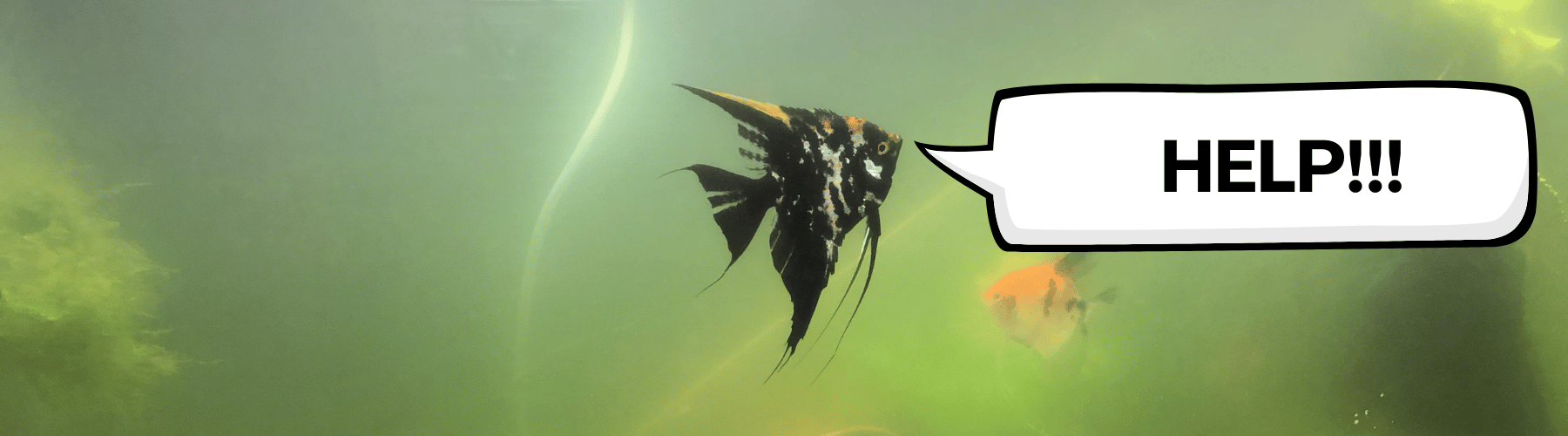
Green water is caused by an algae bloom and can be particularly frustrating. The best way to deal with green water is to reduce the amount of light your tank receives and perform more frequent water changes. You might also consider adding a UV sterilizer to your filtration system, which can help kill off the algae.
Ammonia spikes
Ammonia spikes are dangerous and can quickly lead to cloudy water and sick fish. If you suspect an ammonia spike, test your water immediately. If levels are high, perform a significant water change and check your filtration system.
Adding live plants can also help reduce ammonia levels, as they absorb it as a nutrient. Just make sure to choose plants that are suitable for your tank’s conditions.
Hard water stains
If you notice white, chalky deposits on your tank walls or equipment, you’re dealing with hard water stains. These are caused by high levels of calcium and magnesium in your water. While they don’t directly affect water clarity, they can make your tank look less appealing.
To remove hard water stains, use a vinegar solution or a commercial aquarium-safe cleaner. Be sure to rinse everything thoroughly before putting it back in the tank.
And keep in mind, our team are experts at getting a tank back to gleaming condition. so [let us know] if we can help.
5. The Role of patience and observation
One of the most important things to remember is that patience and observation are key to maintaining a clear aquarium. It’s easy to get frustrated when things don’t go as planned, but an aquarium is a living ecosystem. Changes take time.
Regularly observe your tank and its inhabitants. Are the fish behaving normally? Are there any signs of stress? Is the water chemistry stable? The more you understand your tank, the easier it will be to identify potential problems before they become serious.
Keep a maintenance journal
It might sound a bit obsessive, but keeping a maintenance journal can be incredibly helpful. Record when you perform water changes, clean the filter, test water parameters, and any changes you notice in your tank. Over time, this record will help you identify patterns and fine-tune your maintenance routine.
Don't rush to add more fish
It’s tempting to keep adding more fish to your tank, especially when everything looks clear and stable. But resist the urge. Adding new fish introduces new bioloads (waste), which can throw off the balance you’ve worked so hard to achieve.
Always quarantine new fish before adding them to your main tank to prevent the introduction of diseases or parasites. And when you do add them, do so gradually, allowing your tank to adjust to the increased bioload.
Enjoying your clear water aquarium
Achieving crystal clear water in your aquarium is a rewarding experience. It takes time, effort, and a little bit of trial and error, but the results are worth it. There’s nothing quite like the satisfaction of looking at a beautifully maintained tank, knowing that your fish are healthy and thriving.
Remember that every aquarium is unique, and what works for one might not work for another. The key is to stay patient, observe closely, and adjust your approach as needed. With the right balance of care and attention, you’ll be able to enjoy a clear, beautiful aquarium for years to come.
And if you have any questions or you’d like some help – [drop us a line]. We are here to help you achieve crystal clear water in your aquarium whether it’s helping you understand filter options or scheduling a water change.